
Plastic injection molding QC in China: flash, sink, and dimensions
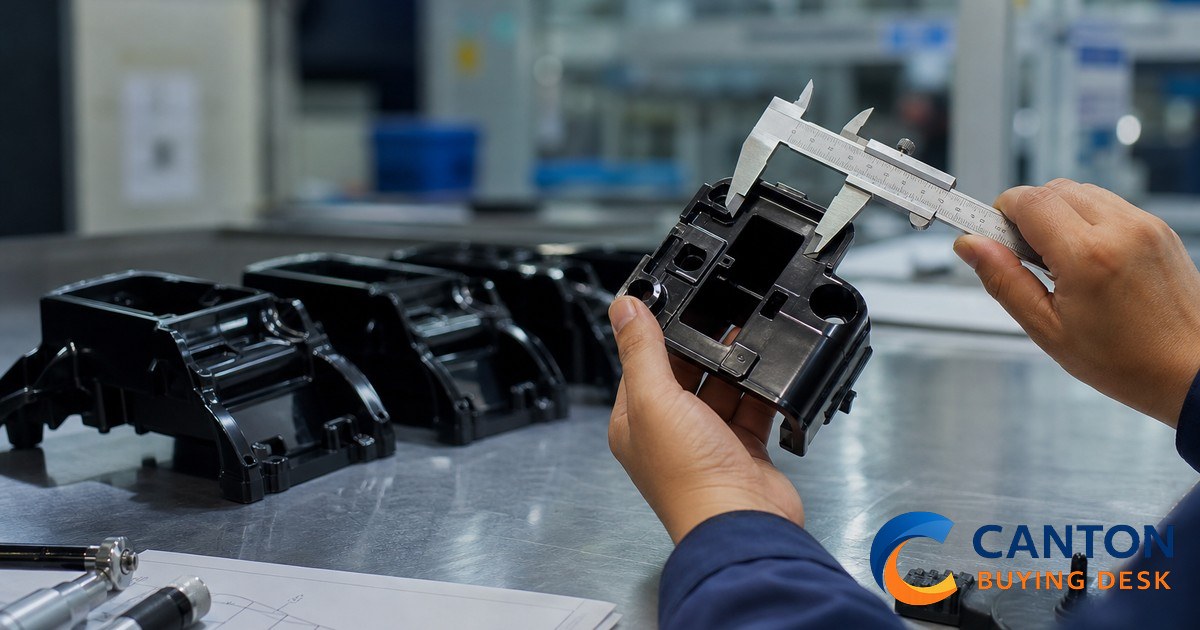
Flash, sink, and dimensions: where specs meet the line
When sourcing plastic parts from China, plastic injection molding QC in China is where specifications meet real-world production. Buyers often rely on spreadsheets and golden samples, but polymer behavior, mold wear, and rushed line operations lead to recurring issues: flash, sink marks, and dimensional inconsistencies.
A rigorous QC system addresses these core problems head-on.
On the desk: on-site sourcing services, our sourcing engagement process, Metal stamping factory audit China: tooling wear and press safety, and Lithium battery shipping compliance for goods from China.
First article plastic parts: establish a stable process baseline
First article (FA) plastic parts are not just samples—they are the official process contract. Conduct FA runs under fixed conditions: identical resin batches, drying cycles, hot-runner settings, and cooling times.
Document the full shot sequence. Capture photos of gate vestiges, knit lines, and ejector witness marks.
Label each cavity’s FA plaque with unique IDs and timestamps. Random variations between FA shots signal an unstable process, not acceptable variance.
Pair FA records with a defect code list linking issues to clear rework rules.
Cavity balance checks: eliminate hidden multi-cavity risks
Cavity balance checks are critical for multi-cavity molds, where imbalance causes hidden failures. Perform short-shot tests at nominal and reduced pack and hold pressures.
Track individual cavity weights across shifts as a proxy for fill consistency. Conduct checks after realistic warm-ups, not just technician-calibrated runs.
Repeat after tool changes or hot-runner maintenance. Cavities drift with wear and contamination; one-time checks fail to catch long-term degradation.
Color lot matching: avoid perception and batch inconsistencies
Color discrepancies stem from metamerism, texture differences, or inconsistent masterbatch ratios. Use primary and backup master standards.
Standardize lighting conditions, viewing angles, and digital photo protocols. Document resin, masterbatch, drying hours, and back pressure for every run.
Track regrind usage—unreported changes cause subtle hue shifts. For multi-color programs, maintain labeled retain panels for full traceability.
Practical injection molding QC checklist
- Process validation: test nominal, low, and high pack and hold settings with photos and weight logs
- Dimensional control: measure critical features per cavity at shift start, midpoint, and end
- Cosmetic standards: define light sources, viewing distances, and decision time limits
- Traceability: link cartons to machine, shift, and cavity data via barcodes or lot stamps
Drive quality at the source
Poor QC rarely results from insufficient inspectors—it stems from unmanaged process changes. Focus oversight on material swaps, mold removals, and color resets. Structured evidence capture at these critical moments eliminates most production surprises.
How Canton Buying Desk delivers reliable molding QC
Canton Buying Desk provides tailored verification plans, on-site audits, and ramp sign-off support for injection molding suppliers across the Greater Bay Area and East China. We offer independent witness testing, cavity balance validation, and documented ramp approvals aligned with your risk profile. Contact Canton Buying Desk to align scope to your next mold ramp.
New to our buying desk? See what we do on-site and how the engagement runs.
Have questions about sourcing from the Pearl River Delta? Check our FAQ or Contact Us for a custom quote.