
Lithium battery shipping compliance for goods from China
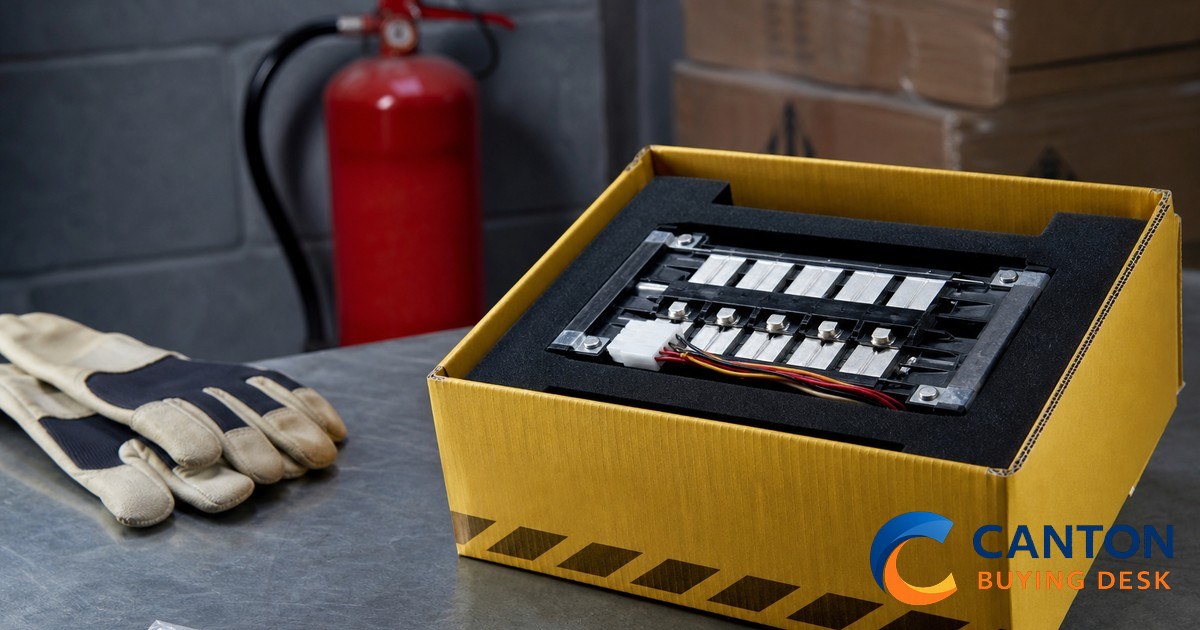
Integrate lithium transport compliance from day one
Lithium batteries power countless consumer and industrial products, but their transport demands strict compliance that cannot be an afterthought. Lithium battery shipping compliance for goods from China must be embedded into product development, not handled at booking. Small oversights lead to detention, fines, or carrier blacklisting.
On the desk: on-site sourcing services, our sourcing engagement process, Plastic injection molding QC in China: flash, sink, and dimensions, and China sourcing for ecommerce seasonal peaks: buffer and QC cadence.
UN38.3 documentation: mandatory transport safety proof
UN38.3 documentation certifies cells and batteries meet UN test standards for transport safety.
Verify the test summary matches your exact SKU: correct chemistry, watt-hour rating, and configuration. Rebranding, cell swaps, or BMS updates invalidate old reports—even if the exterior remains unchanged.
MSDS or SDS for the battery pack: standardized hazard communication
An MSDS battery pack sheet (SDS under GHS) details hazards, handling procedures, and emergency response. It must match the shipment type: standalone cells, modules, or finished goods with embedded packs. Carriers rely on it for stowage and safety planning.
Dangerous goods declaration: accurate classification
The dangerous goods declaration must list proper shipping name, UN number, hazard class, packing instructions, and special provisions. Air rules are stricter: state-of-charge limits and quantity caps apply. Misclassification causes shipment holds and liability.
Operational checks: eliminate rework
- Align carton labels, inner DG marks, and documents
- Verify consistent watt-hour values across all paperwork
- Train staff on audit-ready photos and packing standards
- Schedule re-tests for chemistry or construction changes
Buyer governance: centralized oversight
Maintain a battery matrix per SKU family: chemistry, watt-hour, packaging, approved modes, and document versions. Require dual sign-off (engineering and compliance) for cell changes.
Air vs ocean lithium shipping: key differences
Lithium battery shipping China rules differ by mode. Air transport enforces SOC limits, inner pack tests, and net quantity rules.
Ocean rules are less strict. Use separate packaging and label templates for each mode.
Document consistency: avoid detentions
Ensure UN38.3 reports, invoices, and shipping documents share identical manufacturer names, factory codes, and product names. Clarify assembly chains if using third-party integrators.
SDS and declaration alignment: no conflicts
The MSDS battery pack must include correct GHS pictograms, global emergency contacts, and transport data matching the dangerous goods declaration. Inconsistencies trigger rejection.
Factory discipline: prevent last-minute chaos
- Track inner carton weights and label orientation
- Capture pallet photos for audit trails
- Conduct monthly end-to-end document audits
- Coordinate early for new watt-hour tiers or packaging
Extended compliance: beyond transport
Address recycling rules, consumer warnings, and retailer banned-substance lists. Schedule legal reviews for material changes. Prepare incident response contacts.
How Canton Buying Desk supports lithium compliance
Canton Buying Desk coordinates factory documentation, aligns with forwarders, and reduces last-minute risks before goods leave South China. Contact Canton Buying Desk when you need disciplined field communication for battery-backed launches.
New to our buying desk? See what we do on-site and how the engagement runs.
Have questions about sourcing from the Pearl River Delta? Check our FAQ or Contact Us for a custom quote.