
Pet products sourcing China: chew testing and material declarations
Pets do not read manuals, but regulators read labels
Pet products blend toy mechanics, food chemistry, and textile safety. Buyers are drawn to attractive packaging until lab tests find lead in paint or treat labels omit critical calorie information. Effective pet products sourcing from China requires QC protocols that replicate real pet behavior: gnawing, soaking, and aggressive shaking.
On the desk: on-site sourcing services, our sourcing engagement process, Home appliance EMC documentation when importing from China, and Private label food from China: labels, shelf life, and cold chain.
This article is based on a real project: a US brand launching three product lines—nylon chews, plush squeaker toys, and air-dried treats—manufactured at two Chinese factories with vastly different quality control standards.
FDA pet treat labeling: strict compliance is mandatory
Even marketed as treats (not complete diets), pet treats face FDA labeling enforcement risks at both state and retail levels.
- Verify accurate manufacturer name, address, and lot coding for traceability
- Align guaranteed analysis with independent lab test results
- Review final printed labels (not just design PDFs)
- Test adhesive durability under freeze-thaw cycles for cold-chain shipments
- Confirm clear warnings for supervised pet use
Heavy metals and material integrity for pet toys
Implement a comprehensive heavy metals testing matrix covering substrates, coatings, inks, and any embedded electronics.
- Scrutinize glitter, metallic threads, and shortcut paint-over-mold practices
- Require full disclosure of plastic grades beneath paint layers
- Validate saliva migration testing aligned with realistic exposure times
- Adopt CPSIA (Consumer Product Safety Improvement Act)–aligned standards for cross-border categories
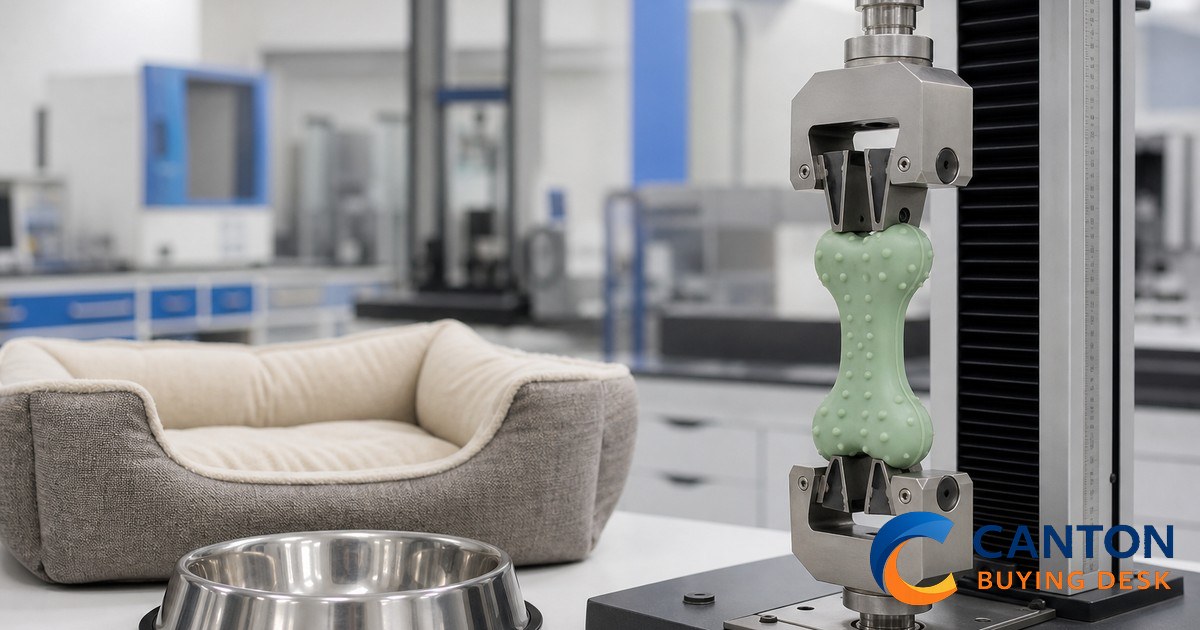
QC chew durability testing: simulate real canine behavior
Design practical chew tests that mimic natural jaw mechanics without overcomplicating protocols. Define:
- Dog size classes and contact durations
- Critical failure modes: splintering, sharp edges post-wear, squeaker exposure
- Mass loss limits and photographic documentation
Category-specific QC checks:
- Plush toys: seam strength, small parts retention post-laundering, eye attachment torque
- Rope toys: fiber shedding resistance, dye fastness after soaking
- Indoor products: VOC (volatile organic compounds) emissions testing
Strong QC thrives on transparency. Factories that hide rework risk brand reputation far more than those that document retest cycles.
On-site factory verification: beyond paperwork
- Test soft plastics for phthalates and stabilizers; demand full paint layer declarations
- Assess battery compartments for tool-free access risks and accurate chemistry labeling
- Verify textile colorfastness under saliva and detergent exposure
- Enforce strict line segregation for dog vs. cat products to prevent cross-labeling
- Review ingestion hazards for detachable parts after fatigue testing
- Trigger batch retests for pigment or UV stabilizer lot changes
- Audit warehouse rodent control at finished goods storage areas
- Validate returns handling protocols to avoid lot mixing in reworked inventory
- Inspect squeaker corrosion resistance via salt exposure testing
- Verify sharp edge mitigation for metal hardware post-shipment vibration
How Canton Buying Desk supports pet product sourcing
Canton Buying Desk provides end-to-end pet supplier verification, structured inspections, and on-site audits covering labeling compliance, material testing evidence, and mechanical abuse protocols. Contact Canton Buying Desk to align scope with your retailer checklist.
New to our buying desk? See what we do on-site and how the engagement runs.
Have questions about sourcing from the Pearl River Delta? Check our FAQ or Contact Us for a custom quote.