
Industrial components sourcing China: drawings, PPAP, and lot trace
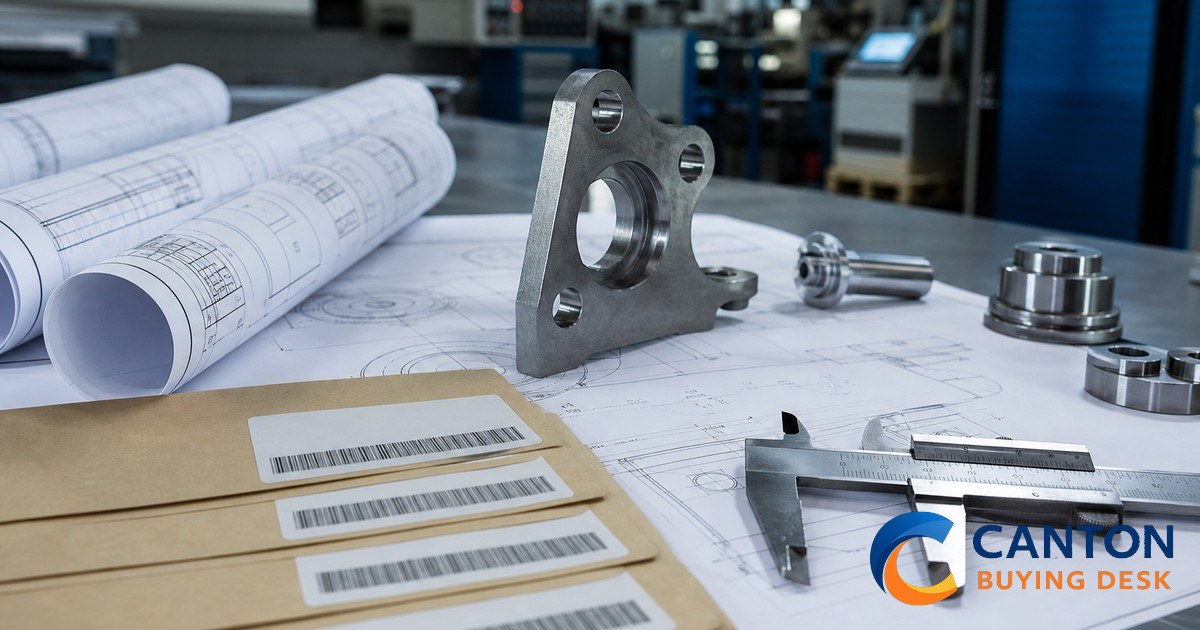
When a commodity bracket still needs PPAP discipline
Industrial buyers often receive a drawing, a quoted price, and a vague promise of full traceability. Then production lines grind to a halt—hardness levels drift, plating thickness falls short, or material certificates reference the wrong heat number.
Success in industrial components sourcing from China hinges on embedding engineering requirements into supplier workflows, not just emailing attachments. This article walks through a power distribution enclosure program: welded assemblies, plated hardware, and a North American OEM needing documented PPAP evidence to onboard a second supplier.
On the desk: on-site sourcing services, our sourcing engagement process, Private label food from China: labels, shelf life, and cold chain, and Glass and ceramics inspection China: breakage, warp, and carton fill.
PPAP level negotiations with China suppliers: avoid empty formalities
Agree on a PPAP level aligned with actual risk. Level 3 is standard, but it is meaningless if dimensional data lacks raw test results or capability studies cherry-pick favorable production cavities. Define submission deliverables upfront:
- Formal control plan
- MSA (measurement system analysis) for critical gauges
- Material certification documents
- Run-at-rate production validation records
- Approved packaging specifications
Reject generic templates outright. Control plans must list exact failure modes for each process: weld blowout, thread galling, powder coat contamination. If suppliers submit boilerplate FMEA (failure mode and effects analysis) documents, your PPAP becomes paperwork—not risk mitigation.
Material certificate traceability: track back to the furnace
Mandate lot traceability that links every production batch to incoming heat IDs, physical test reports, and subcontract heat treatment records. Cross-verify chemical composition ranges against drawing specifications. For plated parts, map plating house certificates to specific batch tanks and thickness inspection logs.
If suppliers merge multiple heats in-house, the traceability chain breaks—unless they document re-melt process controls and new test samplings. Conduct on-site checks of material storage areas: are metal bars color-coded, segregated by lot, and scanned into the system?
Lot-specific COC: non-negotiable documentation
Each production lot requires a dedicated COC (certificate of conformance) that procurement cannot dilute. The COC must include:
- Complete list of performed tests
- Calibration expiration dates for testing equipment
- Sampling plan details
- Authorized disposition sign-off
Ban vague phrases like meets specifications. Require numerical test results paired with tolerance limits. For mixed lots, prohibit a single consolidated COC unless every sub-lot is explicitly referenced.
Sourcing teams must treat documentation discipline as a core factory capability—on par with machinery precision. A manufacturer that resists rigorous paperwork will eventually compromise quality standards.
- Subcomponents: trace inserts, bearings, and fasteners as individual SKUs
- Engineering changes: document ECN (engineering change notice) workflows and line clearance after tooling modifications
- Shipping: record seal numbers, carton photos, and weight verification for high-value metals
On-site verification: critical checks beyond documents
On the shop floor, confirm gage R&R (repeatability and reproducibility) studies exist for all critical dimensions, and calibration stickers match the instruments shown in capability study photos. Review protocols for partial lots, reworked components, and suspect material holds—buyers often face costly issues when sorted lots ship without revised sampling plans.
- For fasteners at risk of self-loosening: request packaging torque test reports
- For secondary materials: verify lubricants and marking inks meet the same substance restrictions as base components
- For sub-supplier oversight: audit heat treatment and plating subcontractors using actual purchase orders, not only generic agreements
- For welded parts: require weld map revisions tied directly to fixture changes
- For critical fasteners: maintain torque audit trails—transit vibration can loosen joints that pass static line inspections
How Canton Buying Desk supports industrial sourcing
Canton Buying Desk helps industrial buyers validate supplier quality systems, witness run-at-rate production trials, and conduct on-site document control audits. Contact Canton Buying Desk to plan PPAP-aligned verification or second-source qualification visits.
New to our buying desk? See what we do on-site and how the engagement runs.
Have questions about sourcing from the Pearl River Delta? Check our FAQ or Contact Us for a custom quote.