
Shenzhen vs Guangzhou sourcing: when each hub fits your category
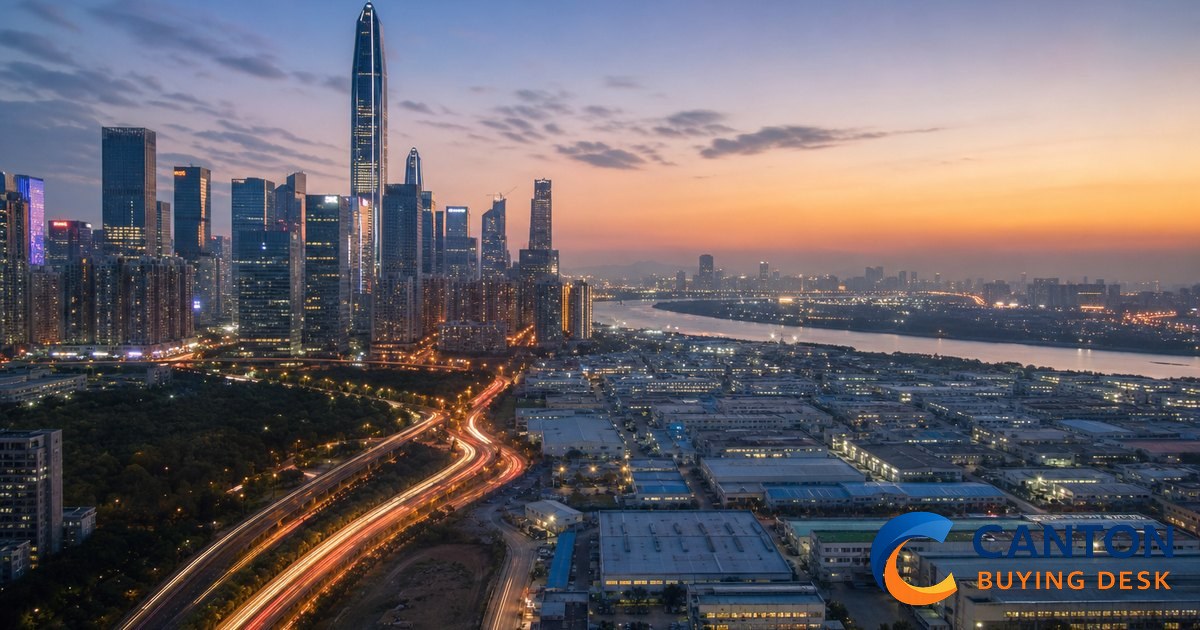
Greater Bay Area hubs: match ecosystems to your roadmap
Shenzhen vs Guangzhou sourcing is far more than a simple city preference—it is a strategic choice of industrial ecosystems. China’s Greater Bay Area is not a unified manufacturing landscape; Shenzhen, Guangzhou, and Foshan each host specialized clusters that directly impact your product development speed, cost efficiency, and quality control.
The right choice hinges on matching your SKU mix, iteration speed, and verification requirements to the strengths of each hub.
On the desk: on-site sourcing services, our sourcing engagement process, China sourcing for ecommerce seasonal peaks: buffer and QC cadence, and Guangzhou logistics brief for buyers: forwarder handoff checklists.
Electronics cluster Shenzhen: rapid iteration and deep components
The electronics cluster Shenzhen thrives in fast-paced hardware development, making it the top choice for PCBA-intensive products, smart accessories, and connected devices. This ecosystem excels at short NPI cycles, flexible engineering changes, and complex BOM requirements.
Dense supplier networks in Shenzhen and neighboring Dongguan minimize sourcing friction, enabling quick prototyping, fast rework loops, and easy access to specialized components. For products requiring weekly firmware updates or agile hardware tweaks, Shenzhen is unmatched.
Furniture cluster Foshan: scale and ocean-freight expertise
For large-format furniture, knockdown designs, and wood or metal fabrication at scale, the furniture cluster Foshan is the undisputed hub. It features extensive showrooms, high-capacity factories, and deep expertise in structural testing, finish durability, and ocean-freight optimized packaging.
Even with Guangzhou as a base camp, Foshan remains the go-to destination for furniture sourcing—offering streamlined showroom routes, material comparison capabilities, and tailored packaging tests for long-haul shipping.
Textile cluster Guangzhou: apparel, fabrics, and trims
The textile cluster Guangzhou anchors apparel, fabric, and trim sourcing across the Greater Bay Area. It integrates wholesale markets, dedicated sample rooms, and mill relationships, streamlining fabric hand-feel evaluations, dye lot control, and accessory matching.
Unlike single-day factory visits, textile sourcing often requires frequent short trips for approvals and adjustments—all efficiently coordinated from Guangzhou, even when weaving or dyeing occurs in nearby cities.
Data-driven selection: sourcing scorecard beyond city loyalty
Avoid arbitrary preferences with a practical scorecard evaluating key factors:
- Engineering change frequency: high (weekly or monthly tweaks) points to Shenzhen
- BOM complexity: high (multi-component, custom parts) points to Shenzhen
- Compliance burden: electronics and EMC work points to Shenzhen; textiles and restricted substances work points to Guangzhou
- Carton cube size: large (bulky furniture) points to Foshan
- Same-day supplier access: when it is critical, bias toward Shenzhen
Travel time is a tangible cost—misplanned trips between clusters can waste half a day. Batch meetings geographically and avoid unplanned cross-cluster travel.
Hybrid sourcing: leverage multiple clusters for optimal results
Many successful brands adopt hybrid models: sourcing electronic subassemblies in Shenzhen, plastic components nearby, and final kitting or packing at a third location. The goal is to build a connected sourcing network, aligning QC protocols and logistics strategies across hubs for seamless execution.
Category fingerprints: clear cluster alignment
- Electronics roadmap: weekly firmware iterations, flexible PCBA spins, rapid fixture tweaks → Shenzhen
- Furniture roadmap: large MOQs, showroom-driven selection, wood or metal fabrication at scale → Foshan
- Textile roadmap: fabric hand-feel decisions, trim libraries, strict dye lot discipline → Guangzhou
Shenzhen vs Guangzhou sourcing is not a loyalty test—it is a logistics and optimization decision. Some buyers base in Guangzhou for lifestyle and interpreter support while spending two days weekly in Shenzhen for electronics reviews; others reverse the pattern.
The key is aligning your schedule with geographic distances and ensuring every visit has clear decision agendas, not passive observation.
Compliance and certification: cluster-specific priorities
- Electronics: EMC testing, software compliance, firmware validation → Shenzhen
- Furniture: structural safety, finish durability, drop-test performance → Foshan
- Textiles: restricted substance testing, colorfastness, wash stability → Guangzhou
English proficiency varies across clusters—export-focused electronics corridors have more English-capable staff, but technical depth differs. Bring bilingual engineers for PCB reviews and bilingual QC for textile tolerances; one interpreter profile rarely fits all categories.
Burnout-free hybrid itineraries
Use a predictable rhythm to optimize travel efficiency across hubs:
- Batch electronics meetings in Shenzhen mornings
- Schedule Foshan visits as full dedicated days
- Use Guangzhou as a hub for textile approvals and coordination
- Pre-share drawings, BOM revisions, and photos to maximize factory decision time
Hotel choice matters less than appointment density—short commutes with focused meetings outperform scenic locations with scattered visits. Track trip metrics: sample approvals, open issues, action owners, and deadlines. End each trip with a one-page report for the entire buying team.
Evolve your strategy with product mix
Revisit your cluster strategy as your product line shifts. A textile brand adding powered accessories will need more Shenzhen time, even if Guangzhou remains the apparel headquarters. Adaptability ensures your sourcing ecosystem scales with your business.
How Canton Buying Desk optimizes Greater Bay Area sourcing
Canton Buying Desk designs efficient cross-cluster itineraries, conducts on-site supplier qualification, and maintains seamless communication across Shenzhen, Guangzhou, and Foshan. We enable local execution while preserving strict specification control for global buyers. Contact Canton Buying Desk for help planning your next trip.
New to our buying desk? See what we do on-site and how the engagement runs.
Have questions about sourcing from the Pearl River Delta? Check our FAQ or Contact Us for a custom quote.