
China factory capacity verification: lines, shifts, and bottleneck
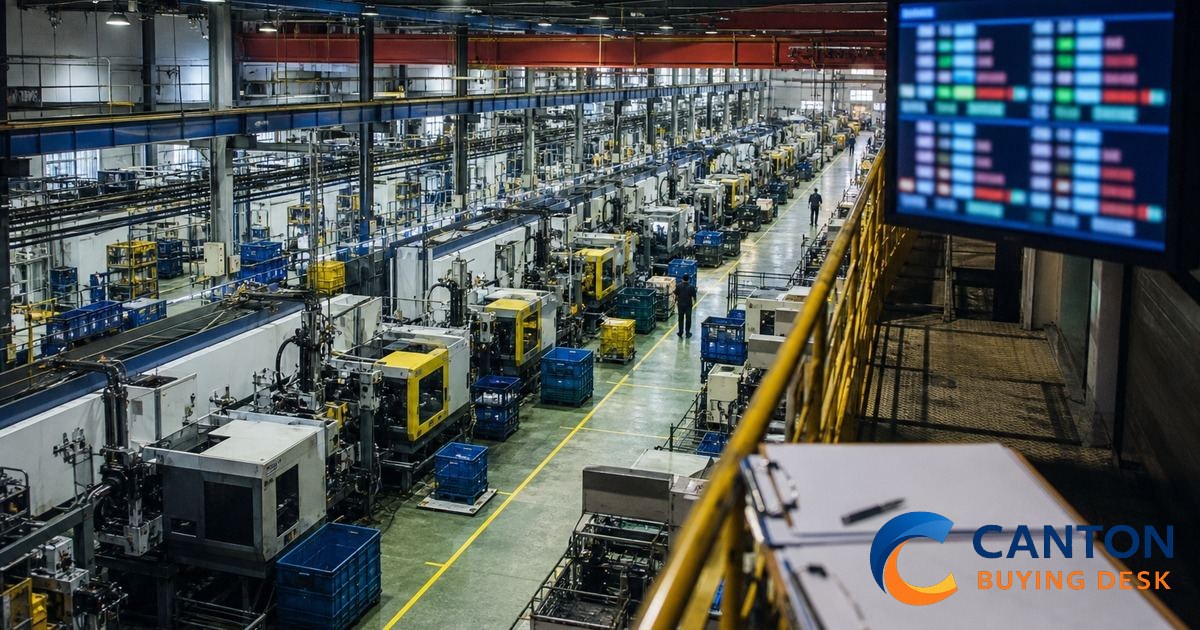
Factory capacity verification China: numbers you can defend to your board
Capacity conversations in China often oscillate between optimism and opacity. A serious factory capacity verification China exercise converts anecdotes into time-based evidence, then compares that evidence to your launch calendar and safety stock policy.
On the desk: on-site sourcing services, our sourcing engagement process, Ethical sourcing China: SMETA and buyer code alignment, and Anti-counterfeit packaging options when sourcing from China.
OEE rough estimate audit: directionally correct, tightly documented
OEE (Overall Equipment Effectiveness) is ideal with months of MES (Manufacturing Execution System) data, but many mid-tier plants run on paper logs. An OEE rough estimate audit can still work if you define assumptions up front: planned downtime, changeover frequency, and quality fallout.
Walk two production days, capture stoppage reasons, and reconcile output counters with packed cartons.
Look for cherry-picked lines running your SKU while sister lines sit idle. Ask what share of output is actually yours versus other customers who may crowd you out after award.
Bottleneck machine identification: follow the queue
Bottleneck machine identification starts where WIP (Work in Progress) piles up. It may be an oven, a tester, a pad printer, or a manual inspection station.
Measure queue times at shift boundaries because staffing changes move bottlenecks. Photograph routing and ask for weekly maintenance tickets for the constraint asset.
- Compare quoted cycle times to observed cycles on three random intervals.
- Check spare parts on site for bottleneck equipment, not only generic consumables.
- Review night-shift staffing; some plants quote day capacity but produce nights elsewhere.
Subcontract overflow capacity: name the sites
Overflow is normal; subcontract overflow capacity becomes a problem when it is unnamed, unqualified, or used silently. Request a written list of allowed subcontractors, visit the highest-risk site, and align quality systems. If your certifications require a fixed location, unauthorized overflow can invalidate compliance claims.
Map logistics between main and satellite plants; extra handling adds defects and lead-time variance.
Commercial signals that contradict capacity slides
Compare hiring ads, utility patterns, and raw material receipts where available. If the factory promises aggressive expansion for your PO alone, ask for capex (Capital Expenditure) evidence and equipment lead times.
Scenario planning for your launch curve
Translate observed output into a simple model that includes yield, rework loops, and holiday calendars. Stress-test the plan with a surge week that assumes one key asset down for maintenance. If the model shows tight margins, negotiate phased releases, alternate qualified sites, or buffer stock before marketing commits dates.
- Align inbound material lead times with the constraint machine schedule.
- Confirm whether your SKU shares a line with volatile high-mix programs.
- Document contingency subcontractors with matched quality plans before you need them.
Evidence packaging for stakeholders
Summarize findings in a one-page narrative with photos, timestamps, and assumptions so executives can decide quickly. Keep raw notes for engineering teams who will validate remediation tasks.
Inventory and mix signals
Walk finished-goods warehouses with an eye for aged cartons, mixed customer labels, and SKU families that share tooling. Ask how the plant sequences changeovers when demand spikes, because aggressive changeovers often hide capacity limits that appear only after you award volume.
Compare inbound material receipts to outbound shipments for a trailing month when possible. Large gaps can indicate undisclosed tolling or subcontract peaks that do not appear on a tidy PowerPoint capacity slide.
- Interview planners and expeditors separately from sales leadership.
- Review maintenance backlogs for assets that constrain your critical processes.
- Capture photos of WIP queues at random times rather than only during guided tours.
How Canton Buying Desk supports capacity verification
Canton Buying Desk helps buyers structure capacity diligence, witness production, and document findings in a way procurement and legal teams can use.
New to our buying desk? See what we do on-site and how the engagement runs.
Have questions about sourcing from the Pearl River Delta? Check our FAQ or Contact Us for a custom quote.